
New Delhi [India], February 7 (ANI): Imagine having a personal ICU at home, where doctors monitor your health 24/7 and alert you to potential issues before they strike. India’s latest innovation makes this a reality, especially for senior citizens and those with chronic conditions.
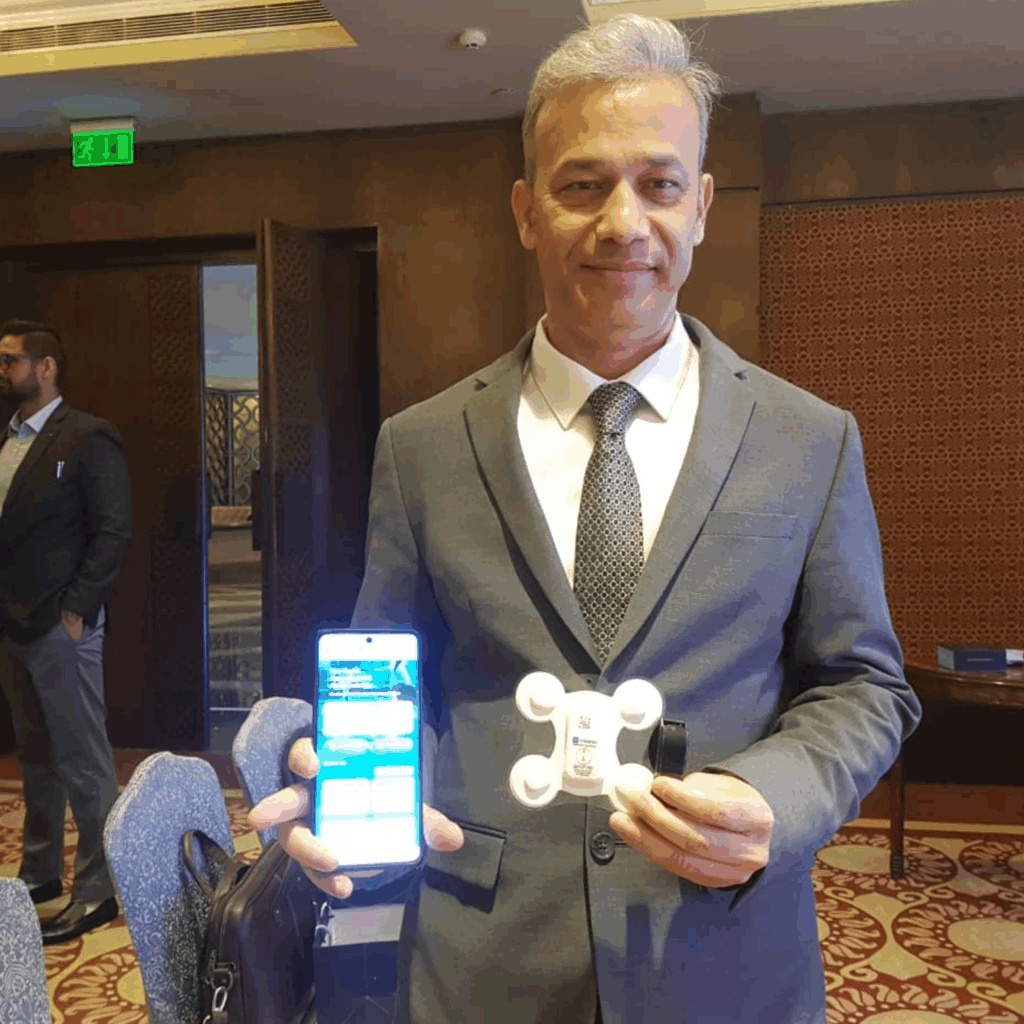
The AI-powered system, called iLive Connect, uses a wearable biosensor patch and wristband to track vital signs and detect subtle changes that may indicate illness. Doctors at a dedicated command centre receive real-time data and can intervene promptly, reducing hospitalisations.
At the first sign of a potentially harmful change in the body, doctors stationed at a medical command centre alert the patient and their family within two minutes, along with clear guidance on what needs to be done immediately.
Dr Rahul Chandola, founder of iLive Connect and a cardiothoracic surgeon, said such devices enable predictive monitoring, helping detect illnesses early and in a timely manner, significantly reducing the need for hospitalisation.
The FDA- and CE-approved device is worn on the chest and wrist. It continuously tracks the patient’s health in real time and transmits the data to doctors at a central command centre.
Senior interventional cardiologist and iLive Connect co-founder Dr Viveka Kumar said it is the world’s first doctor-led AI healthcare ecosystem that effectively brings an ICU-like facility into the patient’s home.
“At the core of iLive Connect is a small wireless biosensor patch connected to a wearable wristband. Together, they continuously capture vital health parameters, including two-lead ECG, heart rate, respiratory rate, oxygen saturation (SpO₂), body temperature, blood pressure trends, physical activity and heart rate variability. The data is transmitted wirelessly to a secure cloud-based platform, which then delivers it to a dedicated medical command centre in real time,” said Kumar.
On round-the-clock patient surveillance, Dr Chandola said that highly specialised doctors remain on duty at the command centre 24 hours a day, actively monitoring patients in real time. “Unlike traditional monitoring systems that respond only after symptoms appear, this system uses AI-driven predictive analytics to detect subtle physiological changes that may indicate the onset of disease well before clinical symptoms develop.”
According to Dr Viveka Kumar, medical decisions are taken based on the continuous flow of data reaching the command centre. He explained that if a patient is not getting adequate sleep over a defined period, the system can identify exactly how many hours of sleep were missed on specific days. Analysing such minute health data helps prevent medical emergencies and reduces the need for repeated hospital admissions.
Dr Chandola said iLive Connect is especially effective for senior citizens, patients recently discharged from hospitals and individuals with high health risks. Many patients require constant medical supervision after returning home from the hospital. The system can instantly detect early signs of physical deterioration or changes in vital parameters.
According to available data, a 10-week observational study of 410 patients using iLive Connect showed a 76% reduction in readmissions. The study enabled early identification of complications related to cardiac conditions, blood pressure instability, metabolic disorders and post-discharge complications.
The technology has proven particularly beneficial for senior citizens living alone, patients with chronic illnesses and those recently discharged from hospitals — a period widely considered critical once hospital care ends and home recovery begins. (ANI)
Bhopal (Madhya Pradesh) [India], March 31 (ANI): The ongoing construction work of Bhopal Metro Project entered into a new phase as Madhya Pradesh Metro Rail Corporation Limited (MPMRCL) formally commenced underground tunnel construction work on Monday.
The tunnel construction work is a key component of the project, and was started in the presence of officials and employees from MPMRCL. During this, a Tunnel Boring Machine (TBM) was introduced, marking the beginning of tunnel excavation work. The use of advanced TBM will ensure safe, precise and faster construction work in densely populated urban areas, according to an official release.
Managing Director (MD) of MPMRCL, S Krishna Chaitanya extended congratulations to all officials and personnel associated with the project on this achievement. He emphasised maintaining the pace of progress and directed that all works should be completed within the stipulated timeline, while strictly adhering to quality and safety standards during the construction phase.
The tunnel boring machine (TBM) was successfully lowered to a depth of approximately 24 metres, from where tunnel construction work commenced. It is an advanced tunnel boring machine, specifically designed for safe, fast, and precise excavation in urban areas and its use is expected to accelerate the pace of construction.
The Bhopal Metro Project aims to provide a modern, safe, and environmentally friendly public transport system in the city. The start of underground construction marks a key step forward in the project’s progress.
