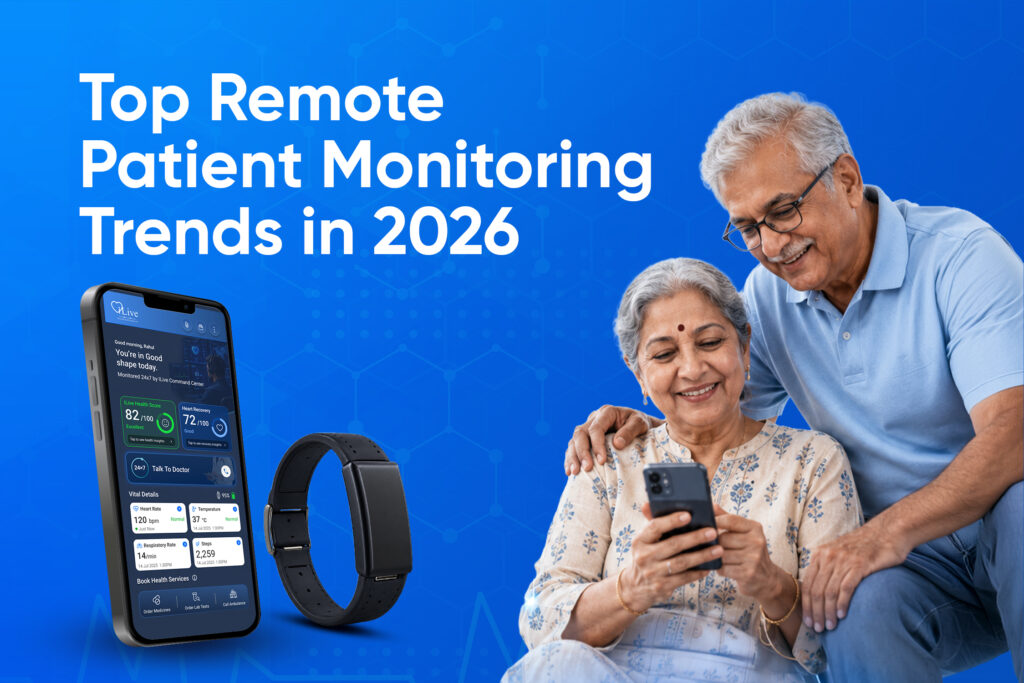
Healthcare is moving beyond episodic care. Today, the focus has been shifted toward continuous, connected care and Remote Patient Monitoring (RPM) is at the centre of this transformation. RPM is going beyond tracking basic vital signs in 2026. There are many advances in artificial intelligence, wearable technology, predictive analytics and integrated digital health ecosystems. These new technologies are changing how patients and healthcare providers engage with health management.
As healthcare organisations focus on proactive and personalised care, several key RPM trends are shaping the future of patient monitoring.
In 2026, one of the largest growth areas will be the use of artificial intelligence to monitor patient data in real-time rather than simply collecting patient information. With an RPM platform that can use artificial intelligence, the patterns, subtle physiological changes, and impending health risks, the RPM solution, which is driven by AI, is able to assist clinical staff in prioritising which patients may require intervention, thus allowing for more timely and better-informed clinical decisions.
Wearable technology continues to progress from being used for fitness tracking to being used for clinical-grade health monitoring. Recently, a new generation of wearable technology has been launched. It includes smart watches, biosensor devices, patches, and medical devices that are connected wirelessly through the Internet. It has been able to provide real-time data and provide insight into vitals, such as heart rate, blood pressure, oxygen saturation, sleep pattern, activity level, etc. These devices allow for extended periods of monitoring, improving patient engagement and their ability to adhere to medical recommendations.
Healthcare providers are increasingly using Remote Health Monitoring to deliver care and support to patients receiving hospital-at-home services and post-discharge patients. The patient can recover at home while the clinical team is able to track the patient’s progress through connected devices and online virtual care platforms. The acceptance of this model allows for greater continuity of care and enhances the patient’s overall experience. Additionally, by providing home monitoring services, healthcare organisations can extend the monitoring of a patient’s health through the use of RPM tools outside of traditional healthcare delivery environments.
Successful remote patient monitoring is based on the active involvement of the patient. Therefore, RPM Platform providers will ensure that, by the year 2026, they have developed platforms that contain user-friendly dashboards, tailored notifications, educational resources, and automated health insights. These enhancements will help patients gain an understanding of their health patterns and allow them to be directly involved in their care pathway.
Interoperability is becoming an essential requirement in healthcare. Leading RPM suppliers are increasingly creating integrated relationships with telemedicine, electronic medical record (EMR) systems and clinical processes to produce a cohesive digital health experience. This integration will allow healthcare providers to have comprehensive access to information regarding the patient and the ability to deliver coordinated care within many different delivery systems.
The global RPM industry continues to grow rapidly as healthcare providers implement preventive, value-based, and patient-centred care strategies. The use of Artificial Intelligence solutions, advanced wearable devices and integrated care solutions is developing remote patient monitoring into a powerful mechanism for continual patient health management.
iLive Connect firmly believes that the future of healthcare involves intelligent, connected care that provides both the healthcare provider and patient with the ability to benefit from the healthcare system. By combining remote patient monitoring, real-time visibility of data and sophisticated digital health capabilities, organisations will provide a more proactive, personalised and efficient patient care experience.