On the day of your discharge from a hospital, it can be a combination of feelings, like relief and anxiety. Leaving the hospital is a huge step forward – but it also means that instead of being monitored by trained professionals around the clock, you will now take care of yourself. This change is often referred to as the “fragile period” in the medical world.
Without a plan for ongoing care after leaving the hospital, you are more likely to suffer complications, medication errors and readmission to the hospital. This guide will examine how important it is for you to get post discharge care and how using a monitoring device can help keep you alive while healing at home.
Continuity of care is a seamless transition from an intensive medical facility (the hospital) to a medical facility with less intensity (your own home) without a reduction in quality or frequency of oversight or monitoring. Typically, after leaving the hospital, your next contact with a physician may be weeks later. Using a Post-hospitalization monitoring system, you will be able to track your health with the medical team, eliminating the “black hole” of information between the two of you.
According to studies, the first thirty days after surgery, heart attack or when recovering from chronic illness are considered to be the most dangerous. During this time frame patients may experience:
Many patients often go unnoticed during this period due to small physiological changes that develop into full-blown emergencies when they have not had access to post discharge care.
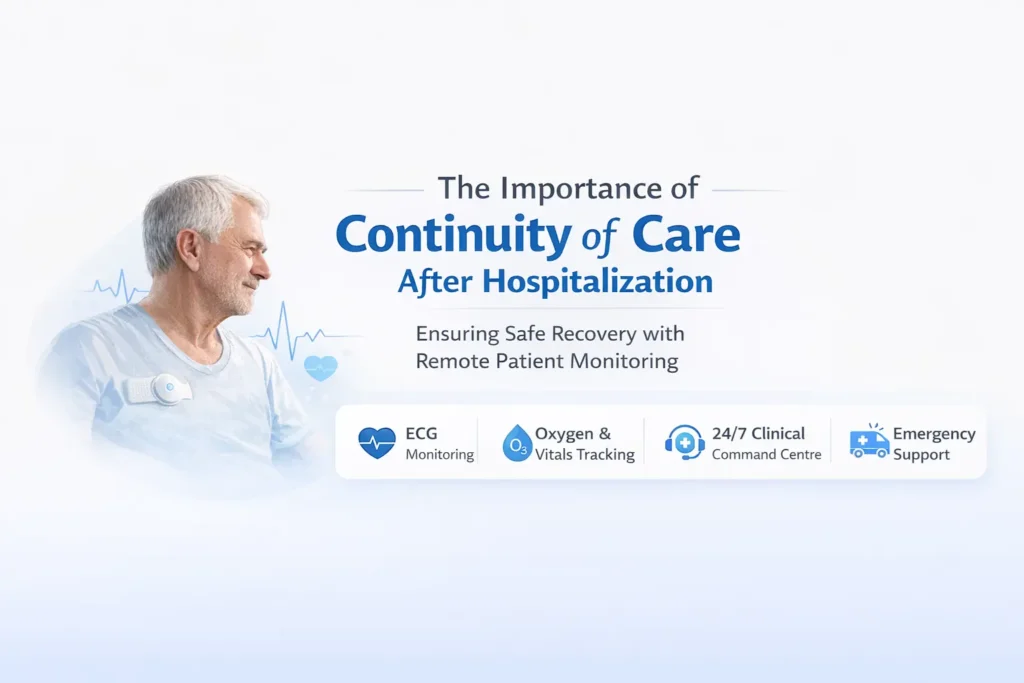
The evolution of medical wearables has introduced a new standard of safety. A modern post hospitalization care device is far more than a fitness tracker; it is a clinical-grade tool designed to act as a “Virtual ICU” at home.
At iLive Connect, we utilize FDA-approved biosensors that track:
The human body often gives “early signals” before a crisis occurs. A spike in resting heart rate or a drop in heart rate variability (HRV) can predict a cardiac event hours or even days in advance. Professional monitoring systems use AI to analyze these trends and alert a 24/7 Clinical Command Centre instantly.
Confusion about new prescription medications is the leading cause of inpatient hospital readmission and is a contributing factor to the need for continued post discharge clinical management of medications to ensure that they are both effective and do not cause negative side effects. When monitoring a patient’s vital signs in response to a new medication, the monitoring team can establish immediate coordination with the patient’s primary care physician to make appropriate adjustments in the patient’s dosage.
Recovery is both mental as much as it is physical; the “fear of the unknown” can create high levels of stress and thereby inhibit healing. When patients know that a team of medical specialists is monitoring their vital signs 24 hours a day, they can rest assured that they are secure enough to focus on repose and rehabilitation.
For family members, taking care of a loved one after a major surgery can be overwhelming. Post hospitalization care services take the “guesswork” out of caregiving. Families receive alerts only when necessary and have access to professional medical advice at the touch of a button through the iLive Connect app.
At iLive Connect, we believe that discharge shouldn’t mean the end of doctor-led care. Our ecosystem is designed to provide the highest level of post hospitalization monitoring in India.
A “road to recovery” does not end with the patient leaving the hospital; rather, that is where the most significant work begins. Patients investing in post hospitalization care and utilizing medical-grade monitoring devices are tracking their own data and also helping secure their ongoing health. Continuity of care is the difference between successful recovery from illness and the potential for recurrence. It is critical for patients and their families to consider the need for continued professional oversight during the “fragile phase” of recovery from illness to provide the necessary confidence to weather that phase unharmed.

February 25, 2026
March 25, 2026
March 18, 2026
March 16, 2026
January 12, 2026