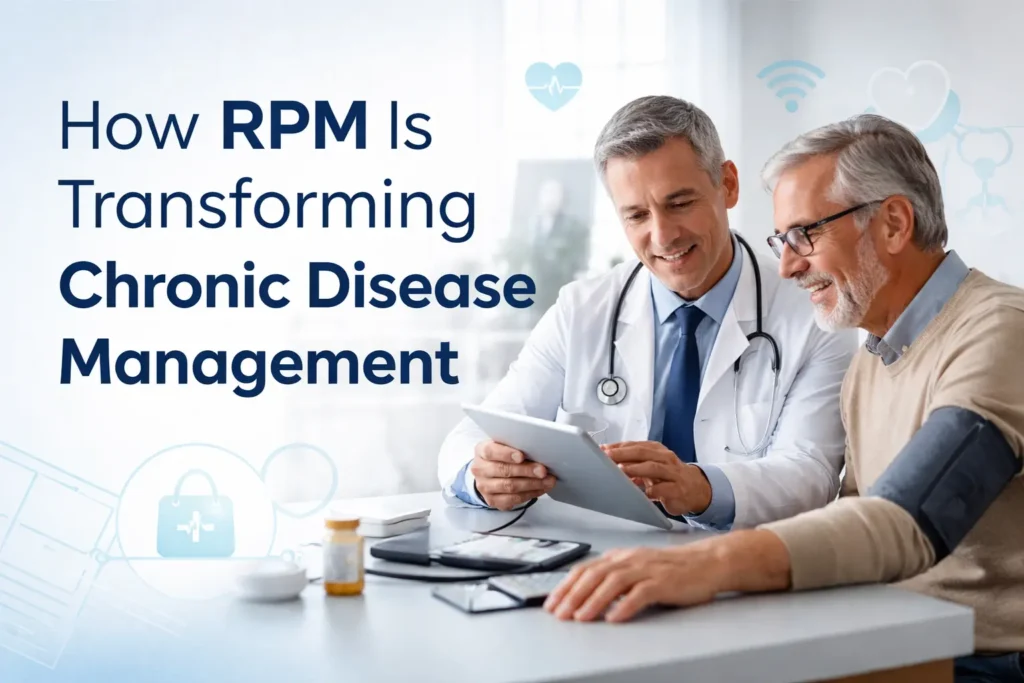
It can feel like a full-time job managing chronic conditions such as diabetes, hypertension, and heart disease. A lot of stress is created because of the lag time between doctor visits, where complications can develop quietly.
Remote Patient Monitoring is changing the management of chronic diseases from a reactive, episodic model to a proactive, continuous, and integrated ecosystem of care. RPM allows the physician to monitor the patient 24 hours a day, 7 days a week, using both medical-grade wearables and analytics powered by artificial intelligence, to detect physiological changes before they become emergent and require hospitalization.
At iLive Connect, we are bridging the gap between the hospital and the home with India’s first doctor-led, AI-enabled healthcare platform.
RPM is an innovative delivery method of healthcare using digital technology to capture an individual’s medical/health status at home and then sending that information electronically to the healthcare provider for review. The data being sent to the provider will include actual hospital-quality information such as 2 lead ECGs, how the ECG progresses over time, how blood pressure changes over time, and SpO2 (oxygen in the blood) levels, all of which are monitored 24/7 in a Clinical Command Centre. This ensures that a chronic condition is managed with the same vigilance as a patient in a physical ICU.
The greatest danger of chronic care management (CCM) is that many times, the person may not realize that their health is deteriorating because they cannot see it deteriorating, like a bump in oxygen, or a slight change in heart rate variability. Therefore, while they may not be aware that they have a pending health crisis, there is actually going to be one coming.
RPM acts as an early warning system. For example, in patients with heart failure, RPM can detect fluid buildup or rhythm changes days before a patient feels ill. Research shows that this level of oversight can reduce hospital readmissions by up to 76%. At iLive Connect, our AI-powered system flags these risks, which are then double-verified by our specialist doctors to trigger immediate intervention.
Most of the time when you are receiving chronic care, your clinician is using “snapshot” data (i.e., a single blood pressure measured during the tension of a doctor’s office visit) as a basis for their decision-making process, which leads to inaccurate diagnoses and misdosing of medications.
With remote health monitoring, there are no longer “snapshots”, only dynamic data that shows how your body responds to stress, sleep and daily activities over time. This longitudinal data enables a level of personalization for your treatment plan that is not possible when using only snapshots. Instead of having a cookie-cutter or one-size-fits-all approach to treating your illness or prescribing your medications and making lifestyle recommendations, you now have a plan that is personalized and based upon your body’s real-time response to how it is functioning.
For elderly patients and those with limited mobility, frequent hospital visits are exhausting. RPM provides the freedom to “age in place.”
Even though there are wearables collecting data, the real beauty of the process actually occurs in the backend analysis of data. AI is capable of reviewing millions of data points to identify risk patterns that are not visible to the naked eye.
Yet, we also recognise that technology alone cannot solve problems. The value add comes from our `Doctor-Led’ approach. While AI provides a picture of risk trends, interventional cardiologists and specialist clinicians are responsible for providing clinical judgement on each case. This ultimately means that every alert will be treated with the same level of clinical judgement and empathy as if it were your own family member being treated in the emergency room.
We don’t just provide a gadget; we provide a Virtual ICU for your home. Our ecosystem is built on three pillars:
Chronic disease management no longer has to be a cycle of hospital visits and health scares. Through the power of Remote Patient Monitoring, we are moving toward a future where healthcare is a silent partner in your daily life—always present, always watching, and always ready to act.

March 16, 2026
March 12, 2026
March 18, 2026
March 25, 2026
January 12, 2026